
 Posted by
 In coil manufacturing, every design detail contributes to the performance and reliability of the finished product. While factors such as winding accuracy, insulation, and core material are important, one of the most critical considerations is selecting the correct wire gauge for coil winding.
Wire gauge directly influences electrical resistance, current-carrying capacity, heat generation, and the overall efficiency of a coil. Choosing an inappropriate wire size can affect product performance, increase energy losses, and reduce the lifespan of electrical components.
At ACME Electronics, we understand the importance of precision in coil manufacturing. Selecting the appropriate wire gauge, combined with accurate winding processes, helps manufacturers produce high-quality coils for a wide range of industrial applications.
What Is Wire Gauge?
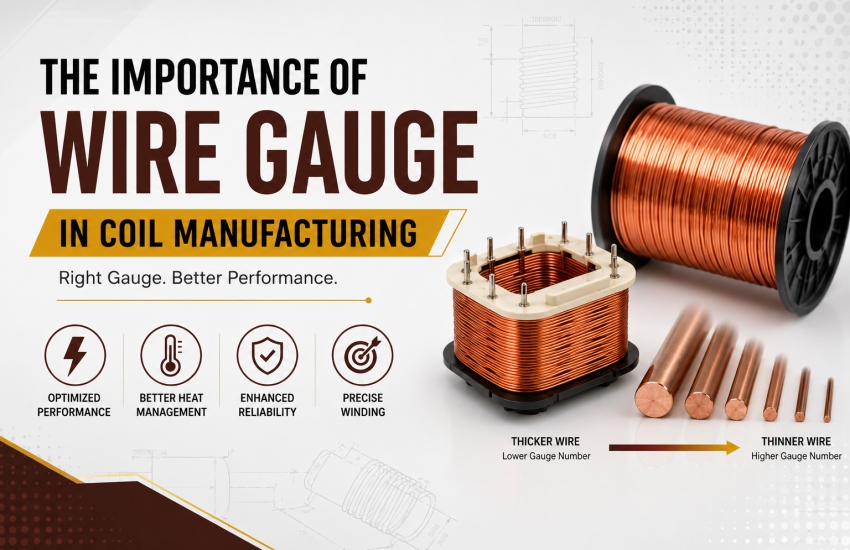
Wire gauge refers to the diameter or thickness of the wire used during the coil winding process. Different wire gauges are selected depending on the electrical and mechanical requirements of a specific application.
In general:
- Smaller gauge numbers indicate thicker wires.
- Larger gauge numbers indicate thinner wires.
The appropriate wire gauge depends on the design requirements of the electrical component being manufactured.
Why Wire Gauge Matters in Coil Manufacturing
Selecting the proper wire gauge for coil winding plays an important role in determining how a coil performs throughout its operating life.
A correctly selected wire gauge helps manufacturers achieve:
- Consistent electrical performance
- Better heat management
- Reliable winding quality
- Improved durability
- Stable manufacturing results
Since every application has different performance requirements, wire gauge selection should always be aligned with the intended use of the finished coil.
How Wire Gauge Affects Coil Performance
Electrical Resistance
Wire diameter influences the electrical resistance of a coil. Selecting the appropriate wire gauge helps achieve the desired electrical characteristics for the application.
Current Carrying Capacity
Different applications require different current levels. Wire gauge selection helps manufacturers design coils capable of operating within the required electrical limits.
Heat Generation
During operation, electrical coils generate heat. Proper wire selection supports efficient heat management and contributes to reliable product performance.
Coil Size
The wire diameter also affects the physical dimensions of the finished coil. Manufacturers consider available winding space when selecting the appropriate wire size.
Product Reliability
Using a suitable wire gauge supports consistent manufacturing quality and dependable operation throughout the product’s service life.
Factors to Consider When Selecting Wire Gauge
Choosing the correct wire gauge involves evaluating several design and manufacturing requirements.
Electrical Application
Different electrical components require different winding specifications based on their intended operating conditions.
Available Winding Space
The dimensions of the bobbin or winding area determine the amount of wire that can be accommodated during manufacturing.
Operating Conditions
Manufacturers consider environmental and operating conditions when selecting wire size to ensure reliable long-term performance.
Product Design Requirements
Every coil design has unique electrical and mechanical specifications that influence wire gauge selection.
Manufacturing Consistency
Using the correct wire gauge contributes to repeatable production and consistent product quality across manufacturing batches.
Common Applications of Different Wire Gauges
Various industries use different wire gauges depending on the product being manufactured.
Common applications include:
- Transformers
- Relays
- Solenoids
- Electric motors
- Inductors
- Sensors
- Automotive electrical components
- Industrial electronic equipment
The selected wire gauge varies according to the design requirements of each application.
Why Precision Matters During Coil Winding
Selecting the right wire gauge is only one part of the manufacturing process. Precision during winding is equally important.
Accurate winding helps maintain:
- Uniform winding patterns
- Consistent coil dimensions
- Reliable electrical characteristics
- Improved manufacturing quality
- Repeatable production results
Modern winding equipment supports manufacturers by improving production consistency while reducing manual variation.
Best Practices for Better Coil Winding Quality
Manufacturers can improve coil quality by following proven production practices.
Select the Appropriate Wire Gauge
Always choose the wire size based on the application’s electrical and mechanical requirements.
Maintain Consistent Winding
Uniform winding contributes to consistent product performance and manufacturing quality.
Monitor Production Quality
Routine inspection throughout production helps identify potential issues before final assembly.
Use Reliable Manufacturing Equipment
Modern winding solutions support efficient production and help maintain repeatable winding accuracy.
Follow Standard Manufacturing Procedures
Consistent production methods contribute to reliable product quality across multiple manufacturing batches.
How ACME Electronics Supports Precision Coil Manufacturing
At ACME Electronics, we manufacture winding machines designed to support precision, consistency, and manufacturing efficiency.
Our product range includes:
- Linear Winding Machines
- Toroidal Winding Machines
- Special Winding Machines
Our winding solutions help manufacturers improve production quality while supporting reliable coil manufacturing across a variety of industrial applications.
Selecting the correct wire gauge for coil winding is an essential part of producing reliable electrical coils. Wire gauge influences electrical performance, manufacturing quality, and the overall efficiency of the finished product.
Combined with accurate winding processes and reliable manufacturing equipment, the appropriate wire gauge helps manufacturers achieve consistent production results and dependable product performance.
At ACME Electronics, we are committed to supporting manufacturers with precision winding solutions designed to meet the evolving demands of the electrical and electronics industries.
Frequently Asked Questions (FAQs)
1. What is wire gauge in coil winding?
Wire gauge refers to the thickness or diameter of the wire used during the coil winding process. It is selected based on the electrical and mechanical requirements of the application.
2. Why is wire gauge important in coil manufacturing?
Wire gauge affects electrical resistance, current-carrying capacity, heat generation, and the overall performance of the finished coil.
3. Does thicker wire always provide better performance?
Not necessarily. The appropriate wire gauge depends on the specific design and operating requirements of the electrical component.
4. What factors should be considered when selecting wire gauge?
Manufacturers typically consider electrical requirements, available winding space, operating conditions, product design, and production consistency.
5. How does ACME Electronics support precision coil manufacturing?
ACME Electronics manufactures advanced winding machines that help improve winding accuracy, production consistency, and manufacturing efficiency across a wide range of industrial applications.
